
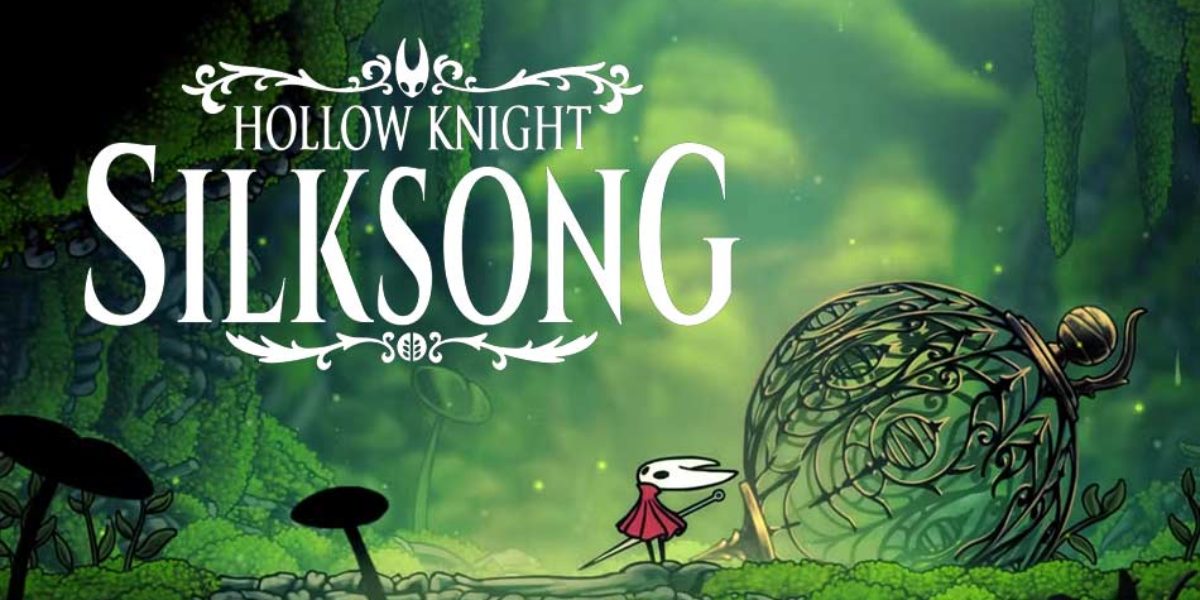
Hollow Knight: Silksong was eagerly awaited by fans after the success of its predecessor. Yet it took patience, because we had to wait for six years for it to be released! Our greatest hope within the disabled player community was that the game had improved its accessibility.

| Type | Aventure Action |
| Publisher | Team Cherry |
| Developer | Team Cherry |
| Release Date | September 4, 2025 |
| Age Rating | 7 years and over |
| Moteur | Visuel | Auditif | Cognitif |
|---|---|---|---|
|
|
|
|
 Moteur
 Visuel
 Auditif
 Cognitif
 Eight keys in use
 Very limited remapping
The first Hollow Knight has, in fact, become a cult favorite among Metroidvania-style games over the years. It’s a popular style of platformer-adventure game, which also includes Celeste, Hades and other gems.
I’m not quoting these two titles at random. In fact, the Metroidvania game genre is reputedly a demanding one, based on skill and reflexes. Yet, Celeste and Prince of Persia: Lost Crown , which were awarded the Innovation in Accessibility Award earlier this year, managed to combine both high standards and accessibility. So, we couldn’t wait either!


You’ll play Hornet, a young spider warrior and heroine of the first game. She was kidnapped from Hollownest and taken to a new region, Pharloom. After an accident sets her free, she sets off on a long journey to The Great Citadel to find out why she was kidnapped.
So, this is a platformer-adventure game, which is divided into many regions. It’s true that the map is immense. Each region is divided into a grid filled with dangerous creatures. Armed with your straight pin, you’ll have to learn how they react in order to manage them well. Some jump, some shoot, and some charge towards you. The further you progress, the more complex they become, requiring you to use the skills you unlock along the way.
Some zones require you to face a boss. They’re tough and follow a series of combat phases. They’re often helped by mobs, or small creatures arriving in waves. These phases are quite long, requiring you to have a good memory and plan for combat phases. The more you die, the more you’ll learn how the boss reacts, and the more you’ll progress.


You’ll gain new powers and items that will allow you to access new areas of previous maps that were inaccessible up until then. So, you’ll need to remember which zones are which, and that’s not easy given the size of the map. By the way, maps aren’t automatically provided. You’ll have to buy them, zone by zone, from scattered merchants. So, as soon as you discover a new area, you’ll need to explore it without any references.
Silksong may initially seem like a very demanding game. To allow everyone to play, we’re waiting for accessibility features to be added to compensate for at least difficulties associated with specific disabilities. Let’s be clear, Silksong offers very little support in this area. We’ll look at all that together.
What if I have a physical disability? 4,5 / 10
As we’ve seen, the game is going to be very difficult for people with physical disabilities. Enemies are fast. You’ll have to jump with millimetric precision to reach certain platforms, but that’s the beauty of this type of game.
The game in itself isn’t action-packed. You need eight keys, without having to make too many combos. From what I’ve seen, there aren’t many long key holds. The big problem is that nothing compensates the need for precision and fast reflexes.


It’s true that it all starts with getting the hang of it. The eight keys include four buttons and four back keys, that is, triggers and L/R buttons. Concerned, we turned to the options and found a control setting! But we were soon disappointed because you can reassign keys… but only to each other. You can’t assign back button functions to directional arrows, for example. This would have made it possible to have everything at the front of the controller. With this method of switching between keys, it means that you’ll necessarily have to use the back keys.
As for joysticks, since we’re in a false 3D environment, you’ll use directional and camera joysticks, which are mainly to lower or raise the camera to display what’s hidden underneath. It allows you to see if a hole is deeper or shallower, and if there are platforms to reach it. However, in the options, there aren’t any sensitivity settings for these joysticks. On the other hand, directional keys can replace joysticks. The left and right keys allow you to move around, and the up and down keys move the camera.


There’s little key management and no sensitivity, so that’s off to a bad start. Unfortunately, the absence of any gameplay aids will compound this difficulty with the controls. The game doesn’t allow you to decrease the difficulty level, number of opponents, number of keyholds, or the precision of your movements.
Silksong will therefore be difficult to use for players with physical disabilities.
What if I’m visually impaired? 4 / 10
When you’re less able to perceive visual information, it’s important to be able to rely on sound, because it’ll give you the information you need.
In Silksong, combat plays an important role. Between the creatures in the various zenes and the bosses, there’s plenty of fighting to be done. Options allow you to remove music and possibly your character’s voices, so that you can concentrate only on useful sounds.


Each creature has a certain behavior with an associated sound. One enemy shouts before jumping. Another boss makes a different noise depending on whether it’s preparing to charge or jump. This is a very good point, as it allows you to plan out your combat phases. However, there are a few limitations. When playing with a headset, the enemy’s position is spatialized. You know roughly where the enemy is, but not always precisely whether it’s on your platform or the one below. In boss battles, it’s even less obvious between the echoes and general atmospheric sound.
Where it becomes unplayable is while exploring. There aren’t any collision sounds, nor any sounds when you pass by a collectible item, such as pearls to pick up or a lever to activate. Of course, there isn’t any sound either when you’re on the edge of a platform. So, to get around in an environment which is dark and not always well-highlighted, you’ll have to rely solely on your vision.


This is especially true since you have no control over color. You can enlarge the interface, which is essentially white. In a dark environment, that’s great. On the other hand, making out enemies is a little trickier for some. A black line outlines them and highlights them a little, but players should have been able to choose the color. That’s not to mention elements that are deliberately hidden from view, such as secret passageways and additional resources.
Since there isn’t any French voice [sic.], text is important. You can’t change the text’s font, but most conversational texts are written in white over large black bubbles, and you can control their speed.
That creates a lot of constraints, and little help to overcome difficulties. We wouldn’t recommend Silksong without checking videos to see if the default contrast and color levels are right for you.
What if I have a hearing disability? 6 / 10
From an auditory perspective, our points of concern focus on information that can’t be seen. Whereas we found enemies’ sound design interesting from a visual-disability point-of-view, the lack of visual cues is going to be a problem here.
As we said, enemies make spatialized noise. This alerts you to their presence and approximate position. If you can’t hear these sounds, you lose important information that isn’t compensated for by a feature that lets you know where enemies are outside of your own field of vision.
The same goes for boss battles. Regarding the second enemy mentioned above, you can see dust on the ground, announcing that it’s about to emerge. The sound tells you what it’s going to do. If it growls as it emerges, it’s about to jump, so you’ll have to wait on the ground. If not, it’ll charge, in which case you’ll have to jump over it. Without the noise, you can tell from the dust cloud that it’s coming, but not what it’s going to do. So, it may, therefore, be difficult for you.


If you don’t perceive these sounds well, you’ll be able to isolate them. The options allow you to mute the music and your own sounds to hear only those of the enemy. It can help make these sounds stand out.
On the other hand, there isn’t any “Mono” sound option. Since sounds are spatialized, you’ll risk not hearing some of them if you have unilateral hearing loss.
As for discussions with characters, they are only held in specific areas and one-on-one. Text is displayed in large, bright speech bubbles, with a logo in the interface displaying whether it’s you or the other character who’s speaking. This lacks information and context, and you can’t change the text, but it remains usable.
What if I have a cognitive disability? 4 / 10
In itself, Hollow Knight Silksong is not a complex game. It’s a platform and exploration game. From a cognitive-disability point of view, we need to make sure that learning is progressive and that players can adapt to manage information.
When it comes to learning, you quickly realize that the problem is going to be remembering what you can do. An action is explained to you when you first encounter it, but the information isn’t repeated in any tutorial. Information is scattered throughout your character’s various panels, as descriptions on carried items.


In the interface, your health is clearly indicated by faces, the reel filling up visually and glowing when you can heal yourself. Everyone in the team understood this well. Regarding the availability of skills such as the spear, an icon is permanently displayed below the health bar, either grayed out or lit up. It’s clear, but when placed in a corner of the screen, some people won’t notice the information and will forget to use it.
Secondly, many battles with even the smallest creature will depend on your ability to analyze its behavior. Since its behavior will always be the same, your strategy for defeating it will also be the same, so you’ll have to repeat the same strategy. But when you’ve got ADHD or difficulty doing this analytical work, it can quickly become a problem. Our Leeroy Jenkins in the team paid the price. Here’s a shout-out to Joel and Steven, who tend to charge the enemy head-on! If you can’t manage this “battle strategy” aspect, the game quickly becomes punishing.
So you die often. This wouldn’t be a problem if dying weren’t so problematic. When you die, you’ll lose your resources, which remain where you died in the form of a cocoon. However, when you die, you return to the last bench you sat on. Those are the save points, and that might be at the other end of the zone!
Going all the way back again might be acceptable when you’ve made a mistake in combat and have understood it so as not to make it again. At worst, it might represent few round trips to get past the boss. However, when you can’t understand your mistakes, going back-and-forth all the time really becomes a frustrating ordeal.


All the more so, as you need to find your way back and know where to go. The principle of a game like Silksong is to have a huge map to explore and remember which way to go. It’s a rare thing to have a detailed map that you can consult at any time! You’ll need to find a cartographer, have the resources to buy the map for your zone, as well as enough to buy pins for useful information such as benches, stations, and your own position.
Before having all of that and understanding how to use it, I lost a good part of our group of testers!


So, it’s a demanding game, based on technique, since each jump is a test. It’s also based on strategy and the ability to memorize things, such as enemy techniques, routes to follow, and quests. However, Silksong doesn’t let you manage these aspects by adjusting the difficulty level, your resiliance, or by helping you know where to go.
What’s more, Silksong has no French voice option [sic.]. It’s immersive – after all, you’re an insect among insects, so the conversations are in an invented, musical language. But this means that all information has to be read. You can control the scrolling speed, and conversations take place in a calm, safe environment. However, if you don’t have access to a screen reader, you won’t understand any useful information.
Our Opinion
Hollow Knight Silksong leaves us with the feeling that it requires a high level of mastery in regard to fine motor skills, analytical ability, and memory. Without any customization options available, you’ll either reach that level, or you’ll be out.
“Yeah, but that’s what this game style is like.” Perhaps, and yet games like Celeste, which are based on exactly the same genre, have progressive aids right up to invincibility level. In both cases, anyone can boast of having completed it in normal mode and fight for the fastest time in speedrun. However, in Silksong, many players won’t even be able to play. It’s a shame, because it’s a beautiful game.