
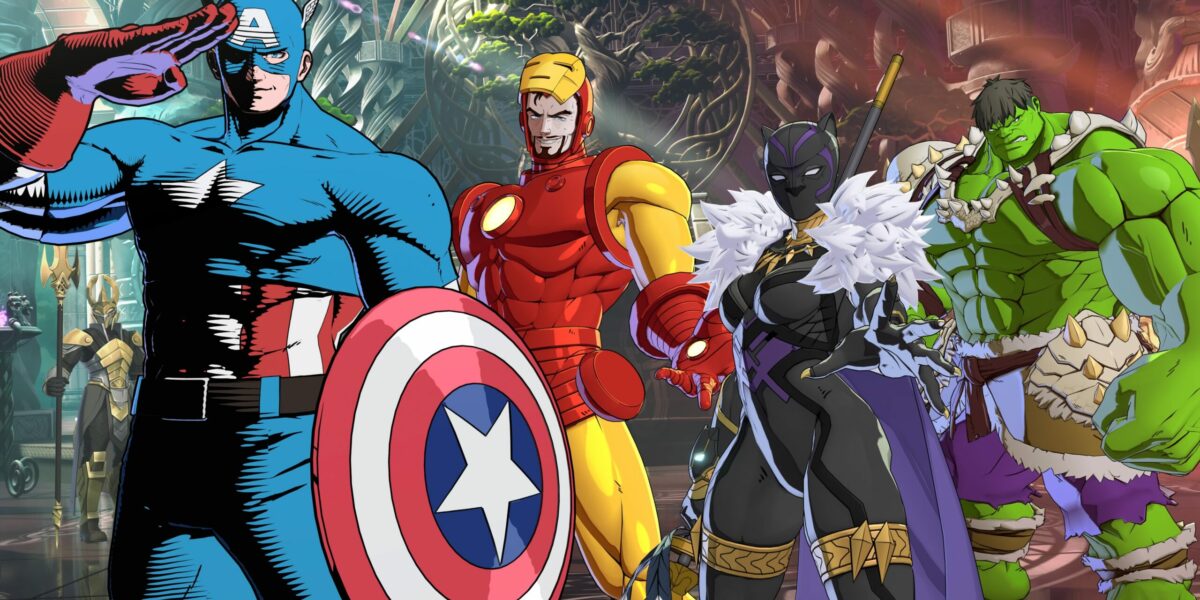
MARVEL Tōkon: Fighting Souls is the new combat game developed by Arc System Works, the creators of Guilty Gear and Dragon Ball Fighter Z. It was developed for Sony Interactive Entertainment with the agreement of Marvel Games.

| Type | Action / Combat |
| Publisher | Sony Interactive Entertainment |
| Developer | Arc System Works |
| Release Date | August 6, 2026 |
| Age Rating | 12 years and over |
| Physical | Visual | Hearing | Cognitive |
|---|---|---|---|
|
|
|
|
 Physical
 Visual
 Hearing
 Cognitive
 Full remapping
 Combos and long-holds
The principle is a simple one, you create a team of four characters among Marvel’s emblematic heroes and villains, each with their own mechanics, combos and game style. During combat phases, you face off against an opposing team on dynamic levels. In fact, you start with two characters and you’ll be able to perform certain attacks that will send the enemy flying into another area. Each zone change unlocks another ally until you have all four. Using special moves, combined strikes and with several allies all at once, the fight becomes very dynamic. It’s a real feast for the eyes!
In terms of variety, you’ll visit many different places such as Wakanda, New York, the Xavier Institute and Knowhere. Furthermore, the launch roster boasts 20 characters including Spider-Man, Iron Man, Wolverine, Magneto, Carnage, Deadpool and others. Additional content is also planned via an annual pass. It’s visually stunning, faithful to Marvel’s universe and clearly designed to appeal to a wide audience.


It’s also a combat game in the most demanding sense. There are combos to memorize, button presses to master and reflex speed is essential for success. You’ll need at least 12 buttons in-game as well as specific mechanics for each character. Furthermore, you’ll encounter opponents online who have perfected their combos. The genre inherently presents certain physical skill barriers, and MARVEL Tōkon doesn’t mitigate them.
However, in terms of accessibility, it’s fair to say there’s a solid technical foundation. Remapping is comprehensive since all buttons are reconfigurable, whether you’re using a controller or a keyboard. Joystick sensitivity is also adjustable. Finally, offline modes offer adjustable difficulty against AI opponents, allowing you to get into the game at your own pace.
Training mode is freely accessible without time limits, and the tutorial can be repeated at any time from the menu. This is a great entry point for someone new to the genre or who needs time to understand mechanics before facing other players.
The French screen reader is good quality [sic.]. It covers menu navigation and in-game prompts. This will allow people who are unable to read, whether because of visual or comprehension difficulties, to configure the game without external help.
As is often the case in combat games, each gameplay action is accompanied by a specific sound cue. These are clearly differentiated according to character and situation. This makes it possible to identify attacks, but there’s still a lot of information missing, for example opponents’ positions, which can prevent you from playing by sound alone. There aren’t any additional audio aids, either. MARVEL Tōkon: Fighting Souls will therefore not be playable for visually-impaired people.


Speaking of sound, a mono audio track is available. Adding controller vibration options can also transmit useful information, especially for matchmaking notifications. This is especially helpful for deaf or hard-of-hearing players. Note that subtitles cover story mode and cutscenes. They’re there, which is essential, but they don’t have an opaque background, so readability is harder in brightly-lit or visually busy scenes. Furthermore, subtitles don’t cover sound effects or non-verbal cues, which doesn’t impact core combat gameplay, but is worth mentioning.
Despite these promising points, there are a few blind spots that will bother some people. For example, there hasn’t been any attention paid to color, and in a game that uses red and green for effects and interface, that’s a real problem. Visual effects are also very dense, with constant explosions, rapid animations, and continuously saturated on-screen colors during combat. For visually-impaired people, some sections can become difficult to read. However, Ethan told us he was still able to play nonetheless.


On the other hand, this “explosive” aspect, both visually and in regards to fight intensity, will create a problem for people with attention deficit disorders, as they can quickly become overwhelmed. This is especially true since the game doesn’t offer any control over these aspects.
Cognitively, though, MARVEL Tōkon is fairly well-adapted, as is often the case in this genre, because you immediately have fun, matches are short, results are clear, and characters are easily identifiable both visually and by sound, since a narrator reads on-screen text. The learning curve is gentle for those who just want to have fun. It’s therefore an easy game to just pick up and play.
Of course, it’s more difficult for those who want to advance in competitive mode, where learning each character’s mechanics becomes a significant undertaking.
To place this title within the genre, Street Fighter 6 remains the benchmark for accessibility in combat games thanks to its dynamic three-button mode, which drastically reduces physical barriers. Furthermore, audio-only gameplay for visually-impaired players is unparalleled. Mortal Kombat 1, on the other hand, offers a better-developed accessibility menu in regards to certain visual aspects.
MARVEL Tōkon: Fighting Souls is honestly in the upper range of the genre, with an overall score of 7.25 out of 10. It’s a genuinely enjoyable and easily-accessible game with a solid technical foundation, but lacking accessibility features that would truly make a difference for more challenged players.
Check out our French-language gameplay video below!